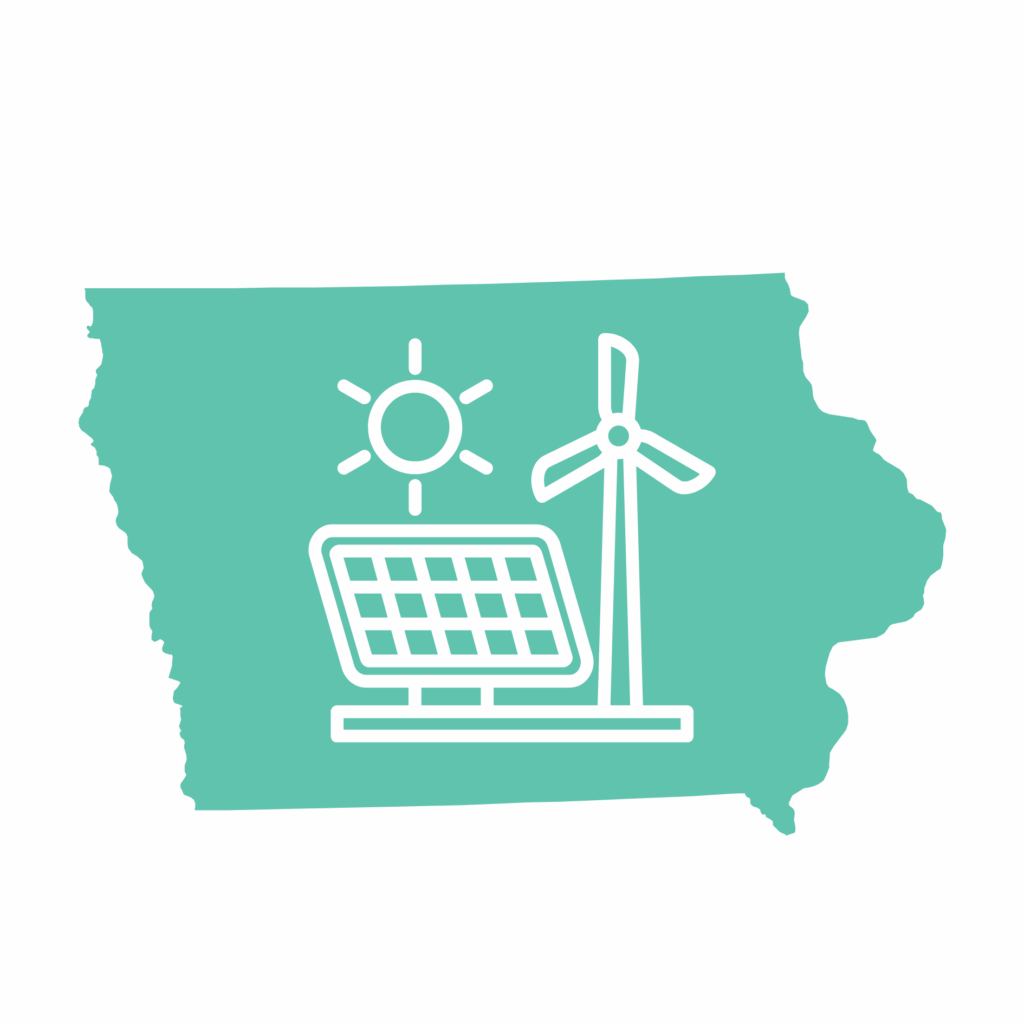
Navigating Iowa’sgrowing energy demandby encouraging renewable energy development in a way that strengthens local communities and fosters a strong economy.
We envision a world where young people have access to mental health care they need. Key to realizing this vision is creating culturally competent and age-appropriate mental and behavioral health program models. It is essential that youth and young adults are involved in the creation of these models.Given how many young people lack access to the mental health services they need, we advocate for additional public and private funding to increase access to quality mental health support for all youth. Achieving funding parity between mental health and physical health programs is another essential ingredient in fulfilling this vision.
Finally, we envision a world in which preventive measures and support are widely accessible before mental health challenges become acute, which can be both effective and cost-saving. This working group of advocates, mental health professionals, and public health leaders are dedicated to the well-being of our youth, and we believe that one of the most promising strategies for advancing our vision is to accelerate access to supportive community individuals such as peer support, near peers, paraprofessionals, and caring adults outside the traditional mental health workforce, thereby broadening and diversifying service networks and making mental health care more accessible and effective for our youth.
Our vision is not just about creating a better future for our youth but about shaping a society that values mental health as much as physical health, and recognizes that everyone, especially our youth, deserves access to quality mental health care.
The Problem
Iowa has made great strides in renewable energy, driven by technological advancements, and significant investments. While wind has been the emphasis thus far, utility-scale solar power and battery storage are increasing, providing opportunities for farm land income, energy predictability and security, local government revenue, jobs, and lower electricity rates. Iowa is projecting notable load growth over the coming decades; this growth reflects, among other factors, the expansion of data centers in the state and increasing interest in industrial electrification and large new emerging loads. At the same time, the expansion of renewable energy has encountered resistance, particularly at the local level in rural areas where projects are often sited. The rising demand for energy and the potential growth of various industries, coupled with challenges such as the politicization of the issue and the disconnect between state and local priorities, emphasize the need for more collaborative approaches to renewable energy infrastructure development.
Beyond fostering partnerships among organizations, there must be an updated vision of how the roles of different sectors in addressing SDOH can be better integrated.
Building an SDOH Workforce
Success in addressing SDOH in a community, identifying a person’s HRSNs (health related social needs), and coordinating services requires trusted community-based workers with strong local knowledge. Community Health Workers (CHWs), social workers, and similar professionals typically have these attributes. For any community, however, a team with workers at different decision levels is needed, and the best team depends on community characteristics.
Financing SDOH Approaches
Upfront investments in non-clinical social services, and in the “infrastructure” of collaboration, are needed to achieve downstream gains. Typically both government and private investment is needed and appropriate. Policy changes should also ensure that budget rules, payment systems, etc., should make such community investment a logical business or public investment decision; that is often not the case today.
Addressing Data Sharing, Evaluation, and Experimentation
The federal government and states need to consider several steps to help build a cross-sector information infrastructure. Data sharing is essential for effective screening and for successful referrals. Accurate and timely data is also needed to measure the effectiveness of SDOH strategies and to build a more complete understanding of the connection between nutrition, housing, education, transportation, other factors, and community health. Improved data and cost-benefit tools are also seen as important for measuring the broader multi-sector impacts of an SDOH investment.
Next steps
Convergence is currently convening a Collaborative of a diverse group of representative stakeholders and experts through the summer of 2024, with the goal of finding consensus on a set of recommended policy changes. These federal and state actions will aim to create a significantly better policy environment for innovative collaborative efforts at all levels, to improve individual and public health.
The Solution
Convergence will lead a collaborative problem-solving process to engage and build trust among a broad range of diverse stakeholders to explore how different policy configurations, non-policy solutions, and strategies can improve siting outcomes, bridge the divides between state and local needs and priorities, and ensure economic, health, and environmental related benefits are fairly distributed across the state.By bringing together a variety of stakeholders that bridge planning, policy and practice, including local governments and communities, industry leaders, environmental groups, utilities, agricultural interests, economic development professionals, and state and local policymakers, Iowa will develop a comprehensive consensus-based energy siting strategy that supports both Iowa’s economic vitality and local values.
Collaborative members
Alex Delworth, Center for Rural Affairs
Anna Gray, Iowa Natural Heritage Foundation
Josh Mandelbaum, Environmental Law & Policy Center
Bill Menner, Iowa Rural Development Council
Chaz Allen, Iowa Utilities Association
David Osterberg, Professor Emeritus at University of Iowa
Emily Kavanaugh, The Nature Conservancy
Ethan Hoehendale, Iowa Rural Electric Cooperative Association
Hayley Moon, Iowa Rural Electric Cooperative Association
Irene DeMaris, Iowa Faith and Climate Network
Jordan Oster, Iowa Environmental Council
Katie Rock, BlueGreen Alliance
Kerri Johannsen, Iowa Environmental Council
Kristy Dahl-Rogers, Attorney
Libby Jacobs, Consultant
Lindsay Brice, Audubon Society
Lucas Beenkan, Iowa State Association of Counties (ISAC)
Luke Seaberg, Iowa State – Extension
Michelle Bustinelos, Siouxland Planning Council & Iowa Council of Governments (ICOG)
Nick Boeyink, Conservative Energy Forum
Paige Yontz, AARP
Paul Lovell, Clean Energy Districts of Iowa
Rand Fisher, Iowa Area Development Group
Robert Palmer, Iowa Business Energy Coalition
Sarah Mills, University of Michigan
Tod Bowman, Center for Rural Affairs
Todd Miller, Iowa Solar Energy Trade Association (ISETA)
Waylon Brown, Clean Grid Alliance
Wendy Bredhold, Audubon Society
Project funders
Interested in funding a project in the future?
We rely on a diverse and growing mix of sources, including individual donors, foundations, and stakeholders at the table.Please contact Jenn Dziak at jenn at convergencepolicy dot org or check out ourdonate page if you are interested in providing support for this project or for Convergence’s work more broadly.