Helping Virginia meet growing energy demand while supporting a strong economy and a healthy, clean environment.
We envision a world where young people have access to mental health care they need. Key to realizing this vision is creating culturally competent and age-appropriate mental and behavioral health program models. It is essential that youth and young adults are involved in the creation of these models.Given how many young people lack access to the mental health services they need, we advocate for additional public and private funding to increase access to quality mental health support for all youth. Achieving funding parity between mental health and physical health programs is another essential ingredient in fulfilling this vision.
Finally, we envision a world in which preventive measures and support are widely accessible before mental health challenges become acute, which can be both effective and cost-saving. This working group of advocates, mental health professionals, and public health leaders are dedicated to the well-being of our youth, and we believe that one of the most promising strategies for advancing our vision is to accelerate access to supportive community individuals such as peer support, near peers, paraprofessionals, and caring adults outside the traditional mental health workforce, thereby broadening and diversifying service networks and making mental health care more accessible and effective for our youth.
Our vision is not just about creating a better future for our youth but about shaping a society that values mental health as much as physical health, and recognizes that everyone, especially our youth, deserves access to quality mental health care.
Virginia faces a critical moment. Demand is rising rapidly, fueled by data centers, economic development, and electrification, while the state is challenged to deliver energy that is reliable and affordable while decarbonizing under the Virginia Clean Economy Act (VCEA). The risks are high – failure to act could harm grid stability, energy costs for vulnerable households, the climate, and Virginia’s economic future.
This moment offers a vital opportunity for leaders across sectors and political lines to build a shared vision, develop effective policies and solutions, and foster the collaboration needed to implement lasting solutions.
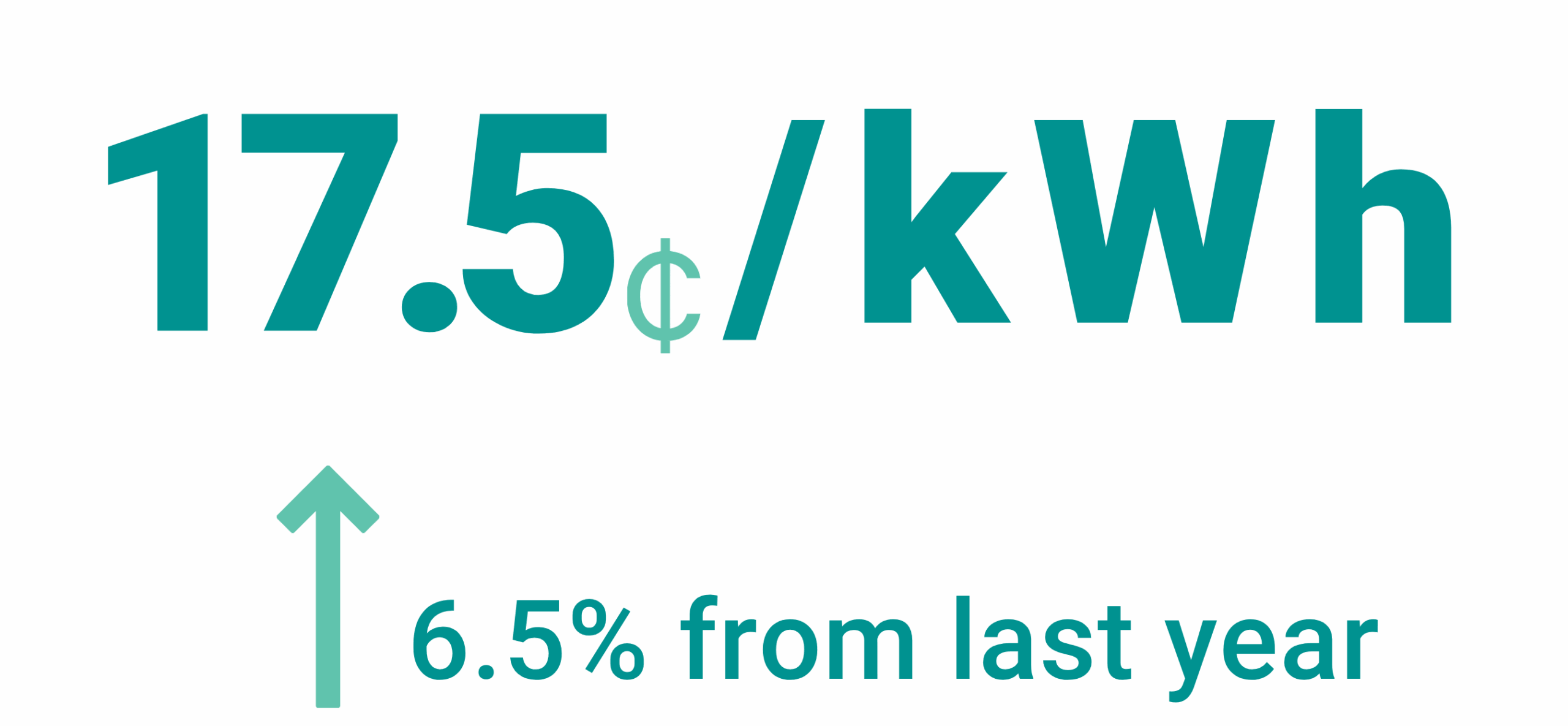
Residential electricity prices in Virginia averaged ~17.5 ¢/kWh by May 2025, a 6.5% increase from the year prior
US Energy Information Administration
Meeting Virginia’s energy challenges requires trust and collective effort – the decisions made now will shape the state’s future for decades.
This Collaborative aims to address the widening electricity supply-demand gap in a way that is affordable, reliable, and clean. The group will chart a vision for Virginia’s energy future that is dependable, affordable and clean; consensus policies and practices that can best deliver this future for Virginians; and the relationships and social capital needed to work together across sectoral and party lines to implement these changes.
As of 2023, natural gas accounted for 55% of Virginia’s electricity generation, nuclear 32%, and renewables about 12%
US Energy Information Administration
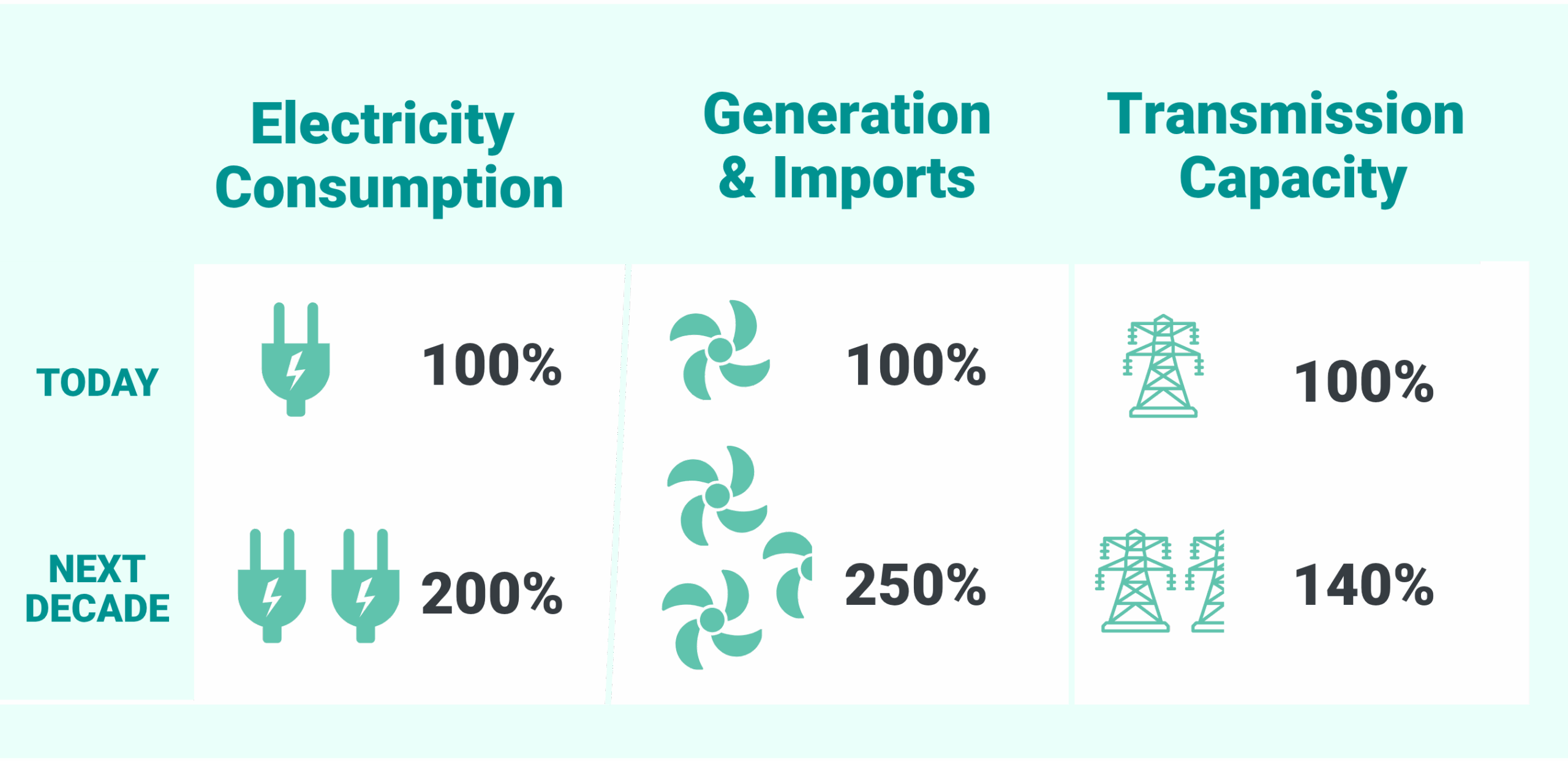
The data center boom is forecast to double Virginia’s electricity consumption in the coming decade, requiring up to 150% more generation and imports, and about 40% greater transmission capacity.
Virginia Joint Legislative Audit
and Review Commission
Beyond fostering partnerships among organizations, there must be an updated vision of how the roles of different sectors in addressing SDOH can be better integrated.
Success in addressing SDOH in a community, identifying a person’s HRSNs (health related social needs), and coordinating services requires trusted community-based workers with strong local knowledge. Community Health Workers (CHWs), social workers, and similar professionals typically have these attributes. For any community, however, a team with workers at different decision levels is needed, and the best team depends on community characteristics.
Upfront investments in non-clinical social services, and in the “infrastructure” of collaboration, are needed to achieve downstream gains. Typically both government and private investment is needed and appropriate. Policy changes should also ensure that budget rules, payment systems, etc., should make such community investment a logical business or public investment decision; that is often not the case today.
The federal government and states need to consider several steps to help build a cross-sector information infrastructure. Data sharing is essential for effective screening and for successful referrals. Accurate and timely data is also needed to measure the effectiveness of SDOH strategies and to build a more complete understanding of the connection between nutrition, housing, education, transportation, other factors, and community health. Improved data and cost-benefit tools are also seen as important for measuring the broader multi-sector impacts of an SDOH investment.
Convergence is currently convening a Collaborative of a diverse group of representative stakeholders and experts through the summer of 2024, with the goal of finding consensus on a set of recommended policy changes. These federal and state actions will aim to create a significantly better policy environment for innovative collaborative efforts at all levels, to improve individual and public health.
Convergence will lead the Collaborative to focus on scalable, implementable strategies and build consensus around both the facts and the values at play. This effort will guide stakeholders to alignment around a pragmatic vision – one where Virginia maintains economic competitiveness, avoids overburdening ratepayers, ensures reliability, and makes continued progress toward environmental goals.
With expert facilitation and time-tested methodology, this Collaborative will focus on the hard questions, where tradeoffs are real, but it will do so with an eye toward innovation, shared purpose, and collective leadership.
An evidence-based, rigorous, and sustained collaborative problem-solving process on Virginia’s energy future can transform conflict, create more productive dialogue, foster social capital and on-going collaboration, and generate consensus-driven principles, practices, pilots, and reforms that meet the Commonwealth’s energy demand while supporting a strong economy and a healthy environment.
Aaron Berryhill, Virginia Department of Energy
Aaron Brown, International Brotherhood of Electrical Workers (IBEW)
Alden Cleanthes, Norfolk Solar
Alex Taylor, Virginia Economic Development Partnership (VEDP)
Amanda Cox, Appalachian Power Company (APCo) / American Electric Power Company (AEP)
Andrew Sinclair, Virginia Chamber of Commerce
Andrew Vehorn, Old Dominion Electric Cooperative (ODEC)
April Wade, Virginia Nuclear Energy Consortium (VNEC)
Blake Cox, Energy Right Virginia
Brett Vassey, Virginia Manufacturer’s Association (VMA)
Carrie Hearne, Commission on Electric Utility Regulation (CEUR)
Chelsea Harnish, Virginia Energy Efficiency Council (VA-EEC)
Chelsea Olivieri, COSOLVE
Christine Noonan, Dominion Energy / Seven Hills Strategy
Dana Wiggins, Virginia Poverty Law Center (VPLC)
Daniel Schory, Arnold Ventures
Elizabeth Marshall, University of Virginia (UVA)
Evan Vaughan, Mid-Atlantic Renewable Energy Coalition (MAREC)
Francesca Callicotte, TerraForm Power
Francis Hodsoll, SolUnesco
Glenn Davis, Virginia Department of Energy

Greg Habeeb, Gentry Locke
Jay Ford, Chesapeake Bay Foundation
Jim Purekal, Advanced Energy United (AEU)
Joe Lerch, Virginia Association of Counties (VACo)
Josephus Allmond, Southern Environmental Law Center (SELC)
Kate Asquith, Clean Virginia
Katharine Bond, iliox
Lillian Anderson, Virginia Conservation Network (VCN)
Maria Saab, Amazon
Martha Moore, Farm Bureau
Michelle Gowdy, Virginia Municipal League (VML)
Morgan Whayland, Virginia Natural Gas / Southern Company
Nicole Riley, Data Center Coalition (DCC)
Nikki Rovner, The Nature Conservancy (TNC)
Peter Anderson, Appalachian Voices
Philip Abraham, Virginia Association for Commercial Real Estate (VACRE) / PJM Interconnection / Vectre Corp
Preston Bryant, McGuire Woods
Sam Brumberg, VA, MD & DE Association of Electric Cooperatives (VMDAEC)
Terry Lasher, Virginia Forestry Association
Will Cleveland, Lighthouse Policy and Law, PLC
We rely on a diverse and growing mix of sources, including individual donors, foundations, and stakeholders at the table. Please contact Jenn Dziak at jenn at convergencepolicy dot org or check out our donate page if you are interested in providing support for this project or for Convergence’s work more broadly.
*By submitting this form you consent to receiving emails from Convergence Center for Policy Resolution